
Choose the right AWS compute for your containers. We compare Lightsail and EC2 across cost, operational simplicity, and production-readiness to help you pick the best fit.
For enthusiasts seeking the best environment for their containerised apps, choosing between Amazon Elastic Compute Cloud (EC2) and Amazon Lightsail can be a confusing procedure in the ever-changing world of cloud computing. Both services are excellent at hosting a wide range of apps, but this tutorial will go into more detail on how to make them easier to use so that users may choose the best option for their needs based on various aspects such as price, uptime, and ease of use.
Understanding the Basics
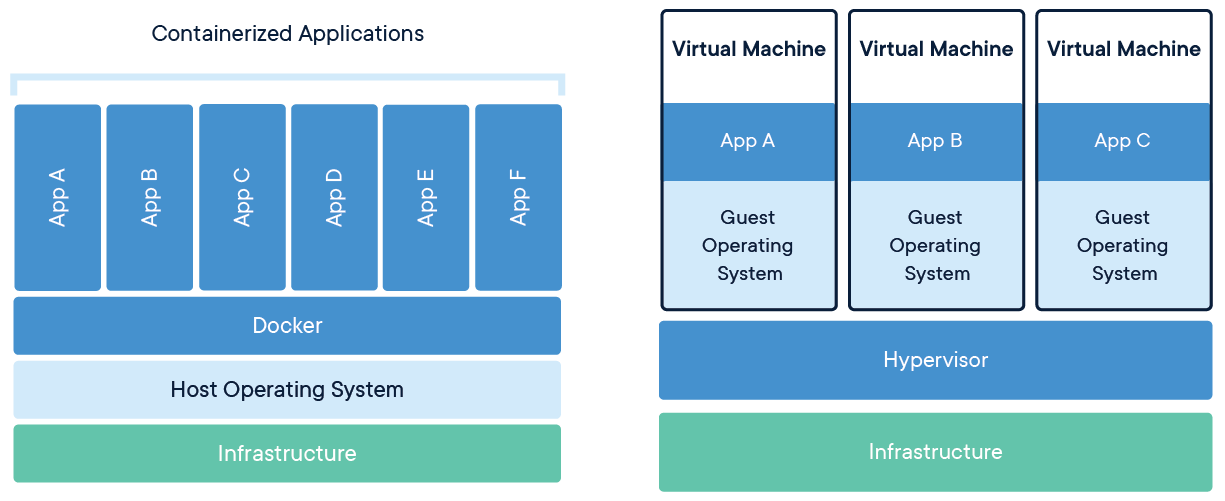
Containers have the unique advantage of separating applications along with their dependencies and runtime environments, enabling consistent application deployment across several hosts. One popular and reliable containerisation platform that is particularly effective and lightweight for deployment is Docker. Amazon Web Services (AWS) enhances this capacity with strong virtual services, of which Amazon EC2 and Lightsail stand out as excellent options for running containers in the cloud.
It becomes crucial to comprehend the fundamentals of containerised apps before adopting them. Whether an application is being tested or is hosted on production servers, containers offer the flexibility to run it reliably in a variety of contexts. Docker encapsulates applications and their dependencies to guarantee reliable operation across several computer environments.
Lightsail vs EC2
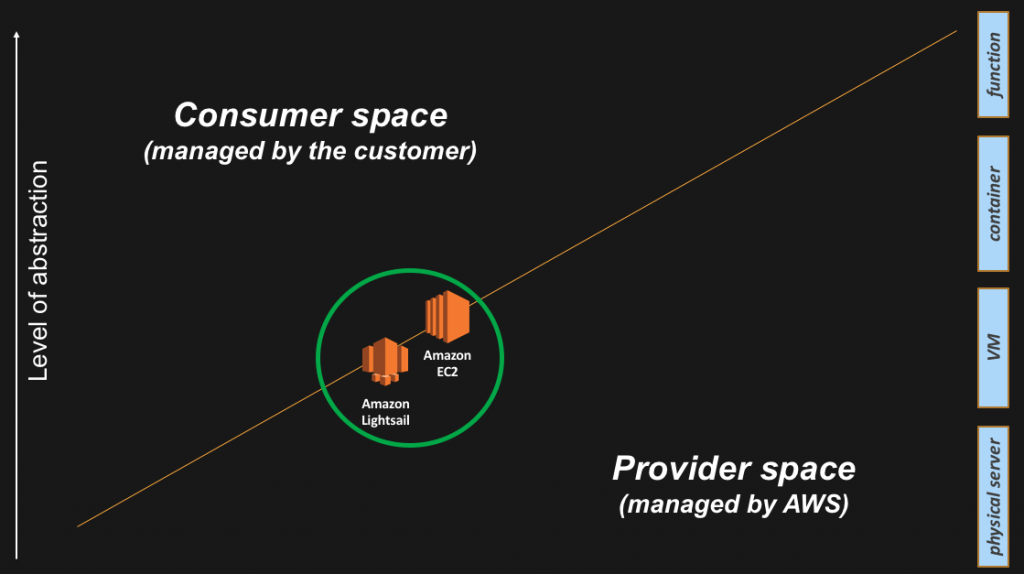
Lightsail is the best option when cost predictability and convenience of usage are the most important factors. Its simple pricing structure makes budgeting easy and eliminates the headaches that come with horizontal growth. On the other hand, EC2 can be tailored to meet certain infrastructure requirements, but managing costs can be difficult — especially when handling erratic usage patterns.
With its container-focused approach, Lightsail stands out for customers who prioritise ease of use and a simpler setup. Users benefit greatly from Lightsail's predictable pricing, which offers a transparent and uniform cost structure — the best option for people who want a clear-cut and reasonable financial outlook.
CloudZA® on Using Lightsail
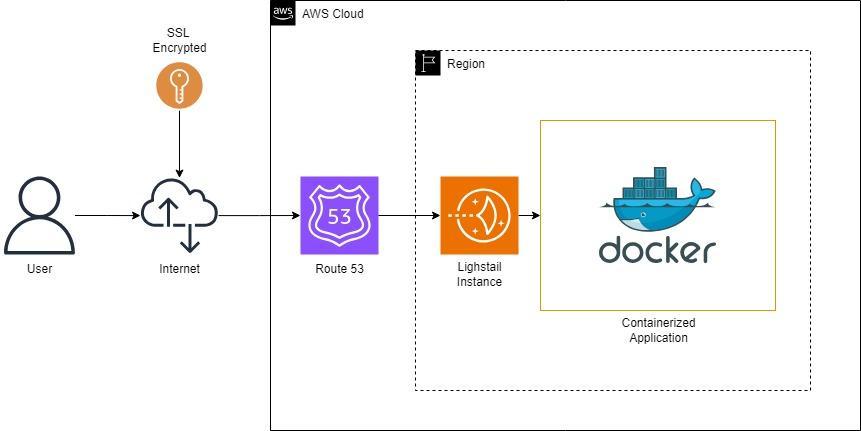
One concrete way that Lightsail's effectiveness is put to use is in hosting open-source communication apps for development teams. A prominent issue in these kinds of situations is data transmission and storage security. Lightsail guarantees secure traffic control thanks to its strong security features, meaning that sensitive data is protected both during transmission and at rest through encryption.
Lightsail is useful in practical situations, particularly for hosting open-source communication apps. A good example is running an application like RocketChat — pulled from Docker and made live on the instance for teams to start utilising immediately.
Security and HTTPS with Route 53 and Letsencrypt
When it comes to production environments, HTTPS adoption is the final step toward ensuring secure data transmission. Using dependable DNS service providers such as Amazon Route 53 makes the process of registering a personal domain name easier, establishing the foundation for acquiring an SSL/TLS certificate.
Letsencrypt, a nonprofit Certificate Authority, provides free SSL/TLS certificates. Upon obtaining the certificate, it interacts with the Lightsail instance effortlessly, changing the protocol from HTTP to the secure HTTPS. Data is encrypted while in transit to protect it from any attackers. Making the switch from HTTP to HTTPS is not only in line with production environment best practices, but also gives users more confidence when interacting with the hosted dockerised applications.
To sum up, the integration of Letsencrypt with Amazon Route 53 creates a strong foundation for improving a Lightsail instance's security. Lightsail, when combined with these security measures, is a dependable option for cloud-hosting containerised applications.
Contact CloudZA® to discuss how we can help you architect and deploy your dockerised applications on Amazon Lightsail or EC2.
Ready to start your cloud journey?
Talk to a CloudZA® specialist — no commitment required.